How to Tell Carpenter Ants From Common House Ants
Small ants crossing a kitchen counter are easy to dismiss. Larger ants near a window frame, a damp basement wall, or a wooden porch can raise a different concern. Carpenter ants do not eat wood like termites, but they can hollow out wood to make nests. Ordinary house ants usually forage and nest in soil, cracks, voids, or hidden spaces without damaging structural wood in the same way.
Telling them apart is not always instant. Ants vary by species, and size alone can mislead. A careful look at the body, the trail, and the place where the ants appear gives a much better answer. If treatment becomes necessary, Pest Agent provides pest advice and recommended products for handling household pest problems, which can help match the response to the insect that is actually present.
Start with the size and body shape
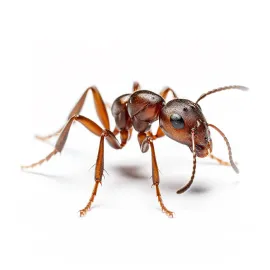
Notice the ant first, then look closer if it is safe to do so. Carpenter ants are usually larger than many common house ants, often with a long, oval body and a noticeable waist between the thorax and abdomen. Their legs can look long in proportion to the body. A small house ant may look compact, with a smoother outline and shorter-looking legs.
Size by itself is not enough. Some house ants are fairly large, and some carpenter ants can be smaller than expected. The shape of the body is more useful. Viewed from the side, a carpenter ant often has a smooth, even curve over the thorax. Many small house ants have a more uneven profile, sometimes with visible bumps or a narrower waist area that reads clearly at a glance.
Color can offer another clue, though it varies. Carpenter ants are often black, dark brown, or a mix of red and black. Common house ants may be black, brown, reddish, or pale depending on the species. Because color overlaps so much, treat it as a supporting clue rather than the deciding one.
Watch how the ants move and where they go
Ordinary house ants often follow a steady trail between a food source and a nest. You may see them along a baseboard, under a cabinet toe kick, around a pet bowl, or near a sink where moisture and crumbs collect. The line can be obvious, especially when many ants are using the same route.
Carpenter ants may also forage in lines, but they are often seen as larger individuals moving at night, especially in warm months. They can travel from an outdoor nest into a structure or along fences, trees, and shrubs. Seeing one or two large ants indoors is not proof of a nest inside, but repeated sightings in the same area deserve more attention.
Pay attention to direction. Ants that repeatedly enter through the same gap near a door, window, pipe opening, or sill may be coming from outside. Ants that emerge from a wall void, a ceiling edge, or around a damp wood surface may be closer to a nest. Trails that split or appear at several points can make the source harder to pin down.
Activity at dusk and after dark is a useful clue because carpenter ants are often more active then. A quiet wall in daylight may have steady movement later in the evening. A flashlight aimed along a baseboard or basement beam can reveal ants that are not obvious during the day. Keep the light away from eyes, and avoid disturbing the area if you plan to observe the pattern again.
Check for signs connected to wood
This is the most important part of the comparison. Carpenter ants use existing softened or decaying wood. They excavate galleries inside it, pushing out coarse wood fragments as they work. That material, often called frass, can look like sawdust or tiny wood shavings. It may collect below a wall, near a sill, beside a floor joint, or around a wooden post.
Ordinary house ants may nest in wall voids, insulation, soil, or small cracks, but they do not produce the same kind of wood shavings from carving out a nest. If fine dust appears near a gap, look at the texture. Frass from carpenter ants often includes visible wood pieces, while dust from general household grit may be powdery and mixed with debris.
Tap suspected wood lightly with a knuckle or the handle of a screwdriver, and listen. Hollow or papery sounds can suggest excavated wood, though hollow sounds can also come from normal construction. A change in sound compared with nearby wood is more meaningful than one isolated tap. Do not poke, pry, or cut into a wall or structural beam just to investigate. If wood damage is suspected in a load bearing area, a qualified professional should assess it.
Moisture is another clue. Carpenter ants are drawn to wood that has been softened by leaks, condensation, poor ventilation, or past water damage. Check around bathrooms, laundry areas, basements, window frames, and exterior doors. Staining, peeling paint, soft wood, or a musty smell can point to the conditions that make a site attractive. Fixing the moisture problem matters as much as dealing with the ants, because dry, sound wood is less suitable for nesting.
Look for winged ants and compare them with termites
Winged ants can appear when a mature colony produces reproductives. These ants have elbowed antennae, a narrow waist, and two pairs of wings of unequal length. Carpenter ant reproductives can be fairly large. Their presence indoors can suggest a nest nearby, but winged insects can also be drawn in through open doors and windows.
Termites are often mistaken for ants. Winged termites usually have straight antennae, a broad waist, and wings that are similar in length and extend well past the body. Worker termites are pale and soft looking, while ants have a clearer waist and harder body. Getting this distinction right matters because termites need a different response from ants, and structural concerns should be handled carefully.
If winged insects are found on a windowsill, collect the general visual details rather than relying on a quick guess. Body shape, antenna shape, waist, and wing length are the useful markers. If there is mud tubing on a wall, discarded wings in large numbers, or wood that sounds and looks damaged, a qualified professional should inspect the structure.
Know when ordinary house ants are the likely answer
Small ants near food, trash, pet dishes, or damp cleaning areas are often household foragers rather than carpenter ants. They may nest outdoors and enter through tiny gaps. Their trails can be controlled by removing food sources, wiping surfaces, sealing entry points, and using a treatment suited to the species and location.
Indoor treatment should be chosen with care. Product labels describe where an item can be used and what it targets. A product meant for outdoor perimeter use should not be applied indoors. Broadcast spraying where ants trail may kill visible ants but leave the nest untouched, and some products can contaminate food preparation areas if misused. Read the label, follow the stated precautions, and keep treatments away from children and pets.
This is where Pest Agent ant killer recommendations can be useful as a reference point, since the site focuses on pest advice and recommended products for household pest problems. The right choice depends on whether the problem is a small foraging trail, ants entering from outside, or a suspected carpenter ant nest in wood.
Choose the response after the identification
For ordinary house ants, start with cleanliness and exclusion. Store food in sealed containers, rinse dishes promptly, fix leaking taps, and empty trash regularly. Follow the trail back as far as practical without tearing into walls. If the route ends at a gap around a pipe, door, or window, sealing that gap may reduce repeat visits. A bait placed along an active route can be more effective than a contact spray when the nest is hidden, because foraging ants carry bait back to the colony.
For suspected carpenter ants, the nest location is the central issue. If the nest is outdoors in a stump, tree, or wood pile, moisture reduction and habitat changes can help. Indoors, nests in wall voids or damp wood can be difficult to reach safely. Treating only the ants that appear on the surface may reduce activity for a short time while the nest remains protected inside the structure.
When there are signs of wood damage, repeated large ant sightings, or a nest that cannot be located, professional help is the sensible route. Local exterminator comparisons can help a homeowner understand which services are available, while Pest Agent ant killer recommendations may help frame product choices for less severe cases. The key is to avoid guessing. A treatment aimed at the wrong ant may leave the real cause untouched.
A careful comparison takes only a little observation. Look at body shape and size, follow the trail, note the time of day, and check for wood shavings or moisture. Those details separate most common house ants from carpenter ants and make the next decision far clearer.
 Facebook
 Instagram
 YouTube